

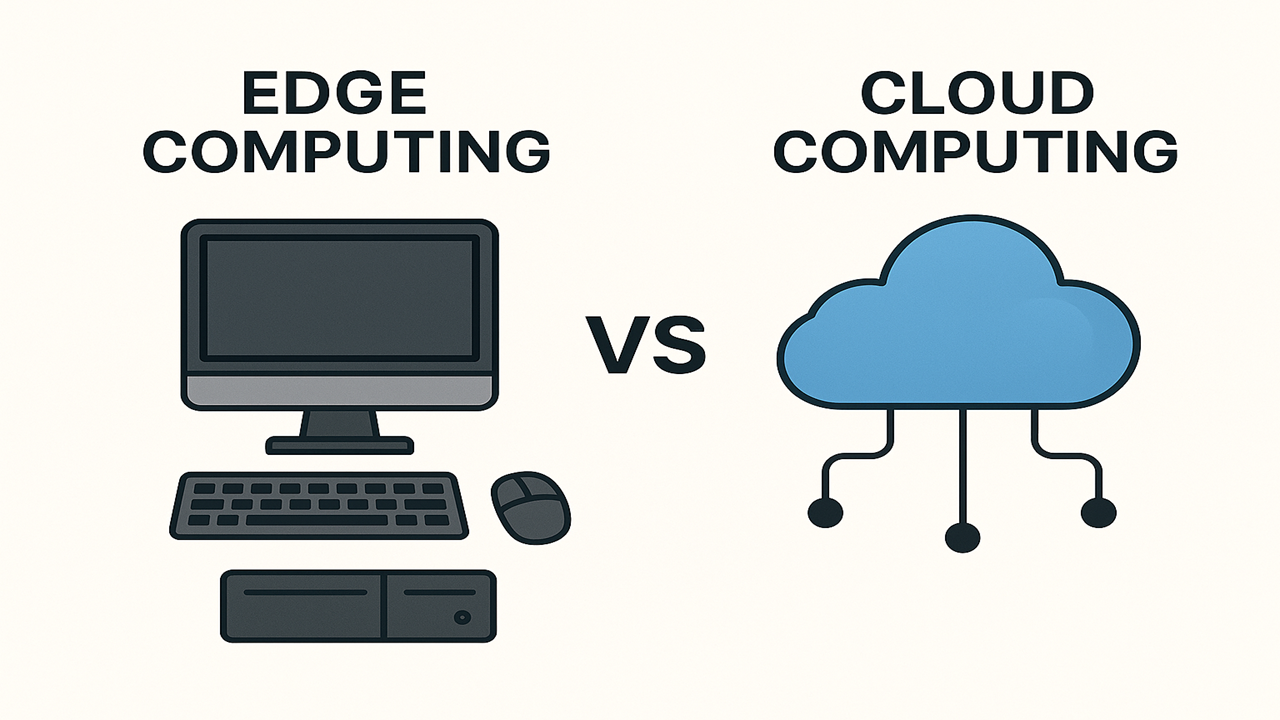
Edge Computing vs Cloud Computing: What�s the Difference?
Cloud computing refers to the centralized processing and storage of data in remote data centers. Services like AWS, Azure, and Google Cloud let you access computing power, storage, databases, and more—on demand and at scale.
Key Benefits:
- Scalability
- Cost-efficiency (pay-as-you-go model)
- Centralized control and backups
- Ideal for data-heavy processing and analytics
Use Cases:
- Web applications
- Big data analytics
- AI/ML model training
- Enterprise SaaS solutions
Edge Computing: Localized Speed
Edge computing brings data processing closer to the source—where the data is actually generated (like sensors, IoT devices, or mobile phones). It reduces the latency and bandwidth required to send data to the cloud.
Key Benefits:
- Ultra-low latency
- Reduced bandwidth usage
- Greater privacy & data sovereignty
- Ideal for real-time decision-making
Use Cases:
- Autonomous vehicles
- Smart cities and surveillance systems
- Remote healthcare monitoring
- Industrial IoT
Which One Should You Use?
It’s not always a matter of choosing one over the other. The future lies in a hybrid model, where both Cloud and Edge work hand-in-hand.
- Use Edge for real-time, low-latency needs
- Use Cloud for deep storage, large-scale analytics, and heavy compute tasks
Final Thoughts
Both edge and cloud computing are critical pillars of modern IT infrastructure. As technology advances, businesses that strategically combine both will gain a significant competitive edge—pun intended!